Why Dr. ColorChip Works
A Detailer's Perspective on Technology, Trust, and Results
By Michael Agaon · Obsessed 2 Detail
A few months ago, I was introduced to the Dr. ColorChip system and began using it in my detailing work. What started as a simple paint chip repair solution quickly became something much more interesting. As both a detailer and a technology professional, I naturally became curious about the process behind the product. The more I used Dr. ColorChip, the more I found myself exploring paint matching, paint code identification, scanner technology, and the customer experience surrounding paint chip repair.
The reason I keep gravitating toward Dr. ColorChip is simple: it works. Unlike traditional touch-up methods that often leave visible blobs or uneven repairs, Dr. ColorChip focuses on blending the repair into the surrounding paint. When applied correctly, the results can be impressive. In many cases, if someone doesn't know where the repair was made, they won't find it.
Beyond Paint Chip Repair
Paint chip repair represents a significant opportunity within the detailing industry. Customers invest heavily in paint correction, ceramic coatings, and paint protection, yet many vehicles still suffer from visible rock chips and road damage. Dr. ColorChip gives detailers a practical solution without the complexity and expense associated with conventional paint repair. To date, I have successfully used the system on eleven vehicles. The results have consistently exceeded expectations, with one exception: my own vehicle, where the supplied paint appeared noticeably darker than the surrounding finish.
Researching Paint Code Identification
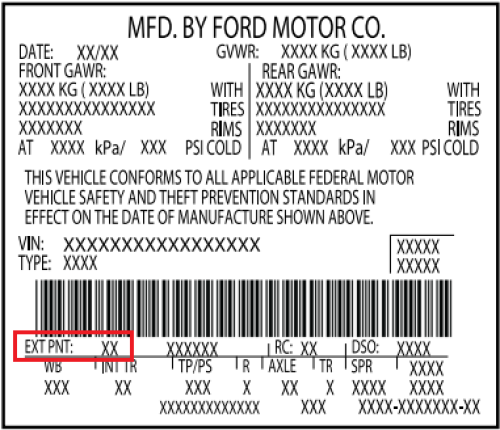
Over the last couple of months, I have been researching paint code decoding, initially focusing on Ford and Honda vehicles. My goal was to build a knowledge-based system capable of accurately identifying paint codes by combining AI, manufacturer specifications, and professional OEM color databases. What I quickly discovered is that color matching is far more complicated than it appears. Different manufacturers use different coding standards, and proper verification often requires access to professional databases, which can be costly.
My capital market software developer background naturally led me to approach the problem from a systems and data perspective.

What My Software Experiment Taught Me
As part of my research, I developed a beta version of a software platform designed to identify paint codes from vehicle stickers using a mobile phone. Technically, it worked. However, when I tested it with customers, I encountered an unexpected challenge. Many clients felt uncomfortable when I asked to photograph the paint code sticker located in the door jamb. Even after explaining the purpose, some questioned why the photo was necessary, while others wanted to see exactly how the software worked before feeling comfortable.
That experience taught me an important lesson: technical solutions are not always better solutions. The more I observed customer reactions, the more I appreciated the brilliance of the Dr. ColorChip Color Reader approach. The ColorChip Color Reader creates confidence, professionalism, and trust. It feels purpose-built and contributes to a memorable customer experience. In many ways, that experience is part of the craftsmanship.
As we often say in software engineering, "Do not introduce unnecessary complexity if it does not solve a specific problem." I realized I was attempting to reinvent a solution that already worked exceptionally well.
Conversations About Color Science
To better understand color-matching technology, I consulted a close friend who previously worked in the Benjamin Moore laboratory environment as QA lead for professional color-scanning systems. We spent hours discussing color-scanning calibration, lighting conditions, color science, and matching algorithms. One thing became clear very quickly: accurate color identification is far more complex than most people realize. Even within professional color industries, only a small number of experts truly understand the formulas, calibration methods, and algorithms behind accurate color matching. Those conversations reinforced my appreciation for the direction Dr. ColorChip has taken.
A Compliment to Tony and the Team
One of the biggest takeaways from this journey has been a newfound respect for Tony and the Dr. ColorChip team. After researching paint databases, developing software, speaking with color science professionals, and testing real-world workflows, I arrived at the same conclusion they reached years ago.
Customers are not simply buying paint. They are buying confidence, trust, accuracy, and an experience. The ColorChip Color Reader accomplishes all of those goals while keeping the process simple and customer-friendly. Looking back, I am genuinely impressed by the business intuition that led the company in that direction. The deeper I explored the problem, the more I found myself validating decisions that Dr. ColorChip had already made.
Better Blending Technique
In my experience, the key to a successful Dr. ColorChip repair is not just color matching, but blending.
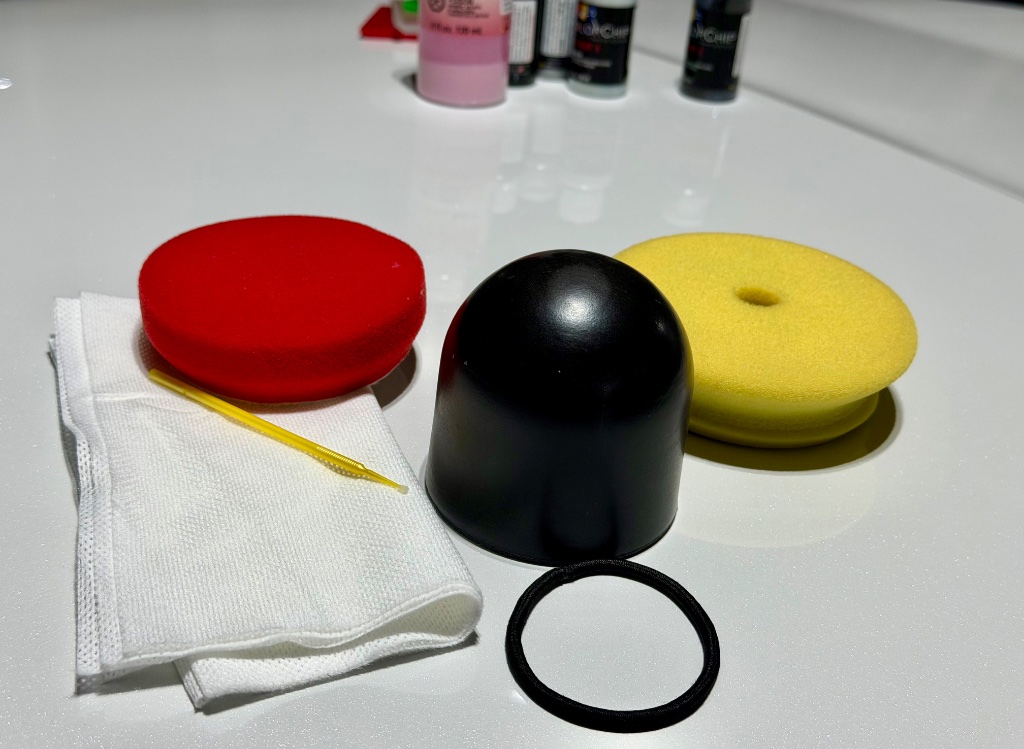
One lesson I learned early on is to avoid wool pads and even fine microfiber polishing pads after the blending process when attempting to jewel the surface. While these pads can produce excellent results during paint correction, their fibers may catch or remove some of the touch-up paint from the repair area. For that reason, I prefer using an ultra-soft foam pad and microfiber cloth combination to gently refine the finish and enhance gloss without disturbing the repair.
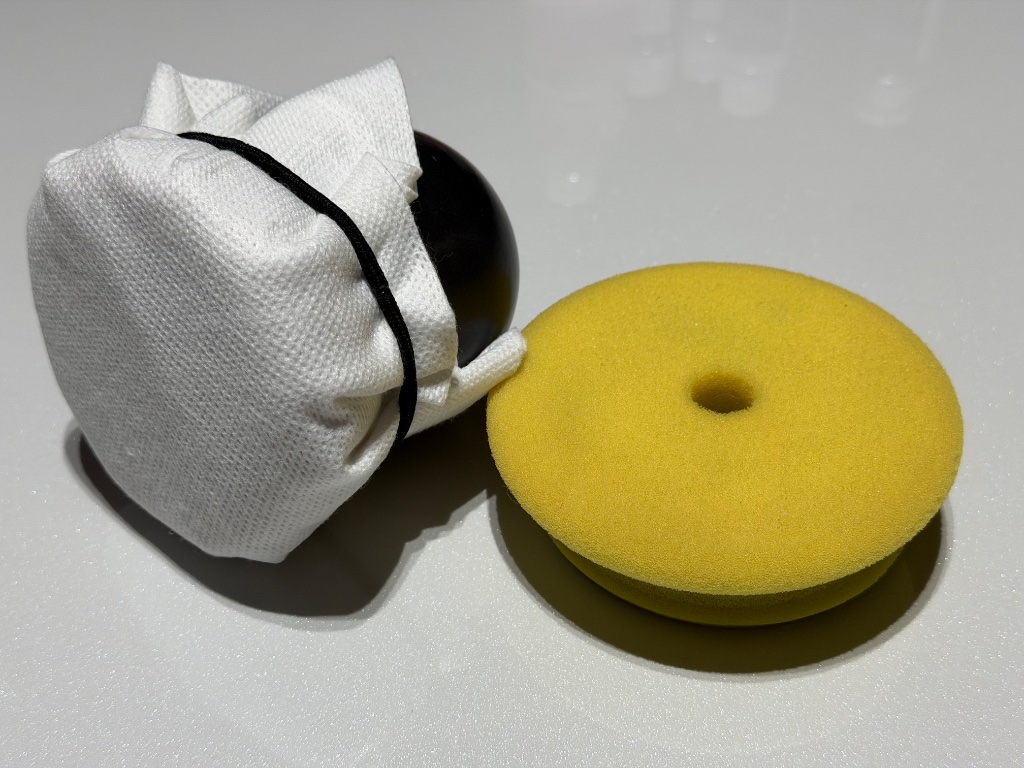
My preferred setup for working with SealAct is a Griot's Garage 3-inch Palm Grip paired with a 3-inch red foam pad. While Griot's offers both the Contour Grip and Palm Grip, I have found the Palm Grip to be more comfortable during extended use. It reduces hand fatigue and makes longer blending sessions much easier. I wrap a wiping cloth around the pad and secure it with a simple elastic hair tie. This creates an extremely gentle blending surface that allows me to feather the repair using SealAct without being overly aggressive. The combination provides excellent control and helps blend the repair seamlessly into the surrounding paint while minimizing the risk of disturbing the touch-up paint.
Pad selection is important. On curved panels, I strongly prefer softer pads because they conform to the surface and distribute pressure more evenly. On larger, flatter panels, a slightly firmer foam pad, such as a yellow or orange pad, can also work well.
For those who are Obsessed 2 Detail like I am, this technique has consistently produced some of the best blending results I've achieved. Sometimes the difference between a good repair and an invisible repair comes down to the final few minutes spent refining and blending the repair into the surrounding paint.
Final Thoughts
What began as an evaluation of a paint chip repair product evolved into a much broader learning experience. The more I researched paint codes, color science, the ColorChip Color Reader, and customer behavior, the more I appreciated the elegance of the Dr. ColorChip system. It solves a real problem, delivers consistent results, and creates confidence for both the detailer and the customer.
Most importantly, it reinforced a lesson I have learned throughout my career: the best solutions are not always the most complicated ones. Often, they are the ones that balance technology, simplicity, craftsmanship, and customer experience.
I genuinely enjoy using the Dr. ColorChip system and see myself as more than just a user. I believe in the product, the process, and the vision behind it. If there is an opportunity to become more involved through an ambassador program or a similar initiative, I would be honored to participate.
And finally, a special thank you to Renny Doyle for introducing the system to the Detailing Mafia community. Without his training and passion for craftsmanship, I may never have discovered it. Sometimes the best products are the ones that make a difficult problem look simple. Dr. ColorChip is one of them.